
TL;DR
- Vinyl siding installation runs $4 to $12 per square foot, or roughly $8,000 to $25,000 for a typical Minnesota home.
- Material grade, home size, labor rates, and old siding removal are the biggest cost drivers.
- Vinyl siding typically lasts 20 to 40 years and returns 70 to 80% of its cost at resale.
- Cleaning it twice a year (more often in humid spots) protects that investment.
- Removing or replacing panels takes the right tool and technique. Rushing it causes the damage you’re trying to avoid.
- A local Minnesota contractor who knows how the climate treats siding will save you money over the life of the project.
Installing vinyl siding costs $4 to $12 per square foot in Minnesota, or about $8,000 to $25,000 total for an average single-family home. The exact number depends on your home’s size, the siding grade you pick, local labor rates, and whether your old siding has to come off first.
Vinyl siding remains the most popular exterior choice for Minnesota homeowners for a simple reason: it holds up to the state’s weather, costs less than most alternatives, and barely needs any upkeep. This guide covers what installation actually costs, what changes that price, how long the siding lasts, how to keep it clean, and what’s involved if you ever need to remove it.
What is Vinyl Siding?
Vinyl siding is exterior cladding made primarily from PVC resin. It’s built to mimic the look of wood siding while holding up better against moisture, weather, and insects.
It comes in a wide range of colors, textures, and profiles, so it fits almost any home style. Unlike wood, it never needs painting or staining, which is a big part of why it stays affordable over the long run.
What does Vinyl Siding Cost Per Square Foot?
Most Minnesota homeowners pay between $4 and $12 per square foot installed, broken down roughly like this:
- Low-end projects: $4 to $6 per square foot
- Mid-range projects: $6 to $9 per square foot
- High-end projects: $9 to $12+ per square foot
These figures usually include materials, labor, trim, and standard installation. Repairs, structural fixes, or upgraded features can push the total higher.
What does Vinyl Siding Cost by Siding Style?
| Style | Cost per Sq Ft Installed | Total for 2,500 Sq Ft Home |
| Traditional Lap | $4–$7 | $10,000–$17,500 |
| Insulated Vinyl | $6–$12 | $15,000–$30,000 |
| Board-and-Batten | $5–$9 | $12,500–$22,500 |
| Vertical Vinyl | $4–$9 | $10,000–$22,500 |
For most homeowners, traditional lap or board-and-batten in a mid-grade material hits the best balance of cost and durability.
What does Vinyl Siding Cost by Material Grade?
Grade affects both material cost and the price you’ll pay per square foot installed:
| Grade | Installed Cost per Sq Ft | Best For |
|---|---|---|
| Basic vinyl | $5 to $7 | Rental properties, budget-conscious projects |
| Standard vinyl | $6 to $9 | Most homeowners, balances cost and durability |
| Premium vinyl | $8 to $12 | High-end homes, harsher weather exposure |
| Insulated vinyl | $10 to $14 | Maximum energy efficiency, coldest climates |
Insulated vinyl costs more upfront but can lower heating and cooling bills over time, which matters in Minnesota’s winters.
What real Minnesota Homeowners Actually Pay
Ballpark ranges are useful, but real examples make the number concrete:
- Small home, 1,200 sq ft, basic vinyl: $6,000 to $9,000
- Medium home, 2,000 sq ft, standard vinyl with insulation: $12,000 to $18,000
- Large home, 3,000 sq ft, premium insulated vinyl: $20,000 to $35,000
Your total lands somewhere on this spectrum depending on your home’s size, your material choice, and your local labor rates.
What Drives the Price Up or Down?
Six factors move the total cost of a vinyl siding project:
Home size and shape. Bigger homes need more material and labor. Steep walls, dormers, and unusual layouts add complexity and cost.
Existing siding removal. Taking off old siding typically adds $1,000 to $3,000, depending on the material and disposal requirements.
Material grade. Thin, basic vinyl costs less upfront but wears out faster. Insulated, premium vinyl costs more but performs better and lasts longer.
Repairs and prep work. Rot, mold, or moisture damage found underneath old siding has to get fixed first, and that adds to the bill. Budget $500 to $5,000 depending on severity.
Regional labor rates. Labor costs shift based on location, demand, and local licensing and insurance requirements.
Permits. Most municipalities require a permit for siding work, typically running $100 to $500.
Labor alone usually runs $2 to $5 per square foot and covers surface prep, siding removal, moisture barrier installation, the actual install, and finish work. On average, labor makes up about 50% of total project cost.
Why are Siding Costs Going Up?
Material and labor costs have both climbed in recent years. Vinyl, insulation, and fasteners cost more to produce and ship than they did a few years ago, and a shortage of skilled tradespeople has pushed labor rates higher across the industry.
Waiting doesn’t always save money. If existing damage is getting worse, delaying a project can end up costing more than acting now. Getting multiple quotes and working with a contractor who prices transparently is still the best way to control cost on your end.
How does Vinyl Siding Compare to Other Materials?
| Material | Cost per Sq Ft | Maintenance | Lifespan |
|---|---|---|---|
| Vinyl | $5 to $12 | Low | 20 to 40 years |
| Aluminum | Similar range | Low, but dents easily | 20 to 40 years |
| Wood | $8 to $15 | High | 20 to 50 years |
| Fiber cement | $10 to $18 | Medium | 30 to 50 years |
| Brick | $15 to $30 | Low | 50+ years |
Vinyl wins on upfront cost and maintenance. Fiber cement and brick last longer but cost significantly more to install. Wood looks great but demands the most ongoing care. Aluminum is durable but dents more easily than vinyl and has largely fallen out of favor for that reason.
How do you Save Money on Vinyl Siding Installation?
- Choose standard or economy-grade material instead of insulated or premium, which can save 20 to 30% on materials alone.
- Get at least three quotes before you commit, and use them to negotiate labor rates.
- Schedule installation in the off-season (fall or winter), when contractors often offer reduced rates.
- Keep the design simple. Complex layouts, dormers, and custom trim all add labor time.
- Consider a partial replacement if damage is limited to one section rather than the whole home.
- Stick to standard colors. Custom colors typically cost more.
- Ask about energy-efficiency rebates if you’re upgrading to insulated siding.
- Handle small repairs early, before they turn into bigger, more expensive problems.
Is Vinyl Siding Worth the Investment?
Yes, for most homeowners. Vinyl siding delivers a strong mix of low upfront cost, low maintenance, and long lifespan that’s hard to match with other materials.
Homeowners typically recover 70 to 80% of installation costs at resale, which puts it among the better-returning exterior projects you can make. It also never needs painting or sealing, resists moisture and pests, and holds up to two to four decades of Minnesota weather with minimal upkeep.
Watch for these signs that it may be time to replace rather than repair:
- Warping, holes, or cracks
- A chalky or faded appearance
- Loose or missing panels
- Rising energy bills tied to failing insulation
- Moisture damage showing up underneath panels
How Long Does Vinyl Siding Last?
Vinyl siding typically lasts 20 to 40 years, and with high-quality materials, professional installation, and consistent upkeep, it’s not uncommon for it to reach 50 years while still looking good.
What determines where it falls in that range? Four things matter most: the quality and thickness of the panels, how well they were installed, the climate they’re exposed to, and how consistently they’re maintained. Thicker, UV-resistant panels naturally outlast thinner, budget-grade options. Even the best siding won’t reach its full lifespan if it’s installed incorrectly, since vinyl needs room to expand and contract with temperature changes. Panels nailed too tightly or fitted improperly tend to warp or crack well ahead of schedule.
How to get more years out of it. Choose UV-resistant, quality-grade panels. Hire experienced installers. Inspect your siding annually. Clean it with mild soap and water rather than harsh chemicals. Address small repairs before they spread.
How do you Install Vinyl Siding?
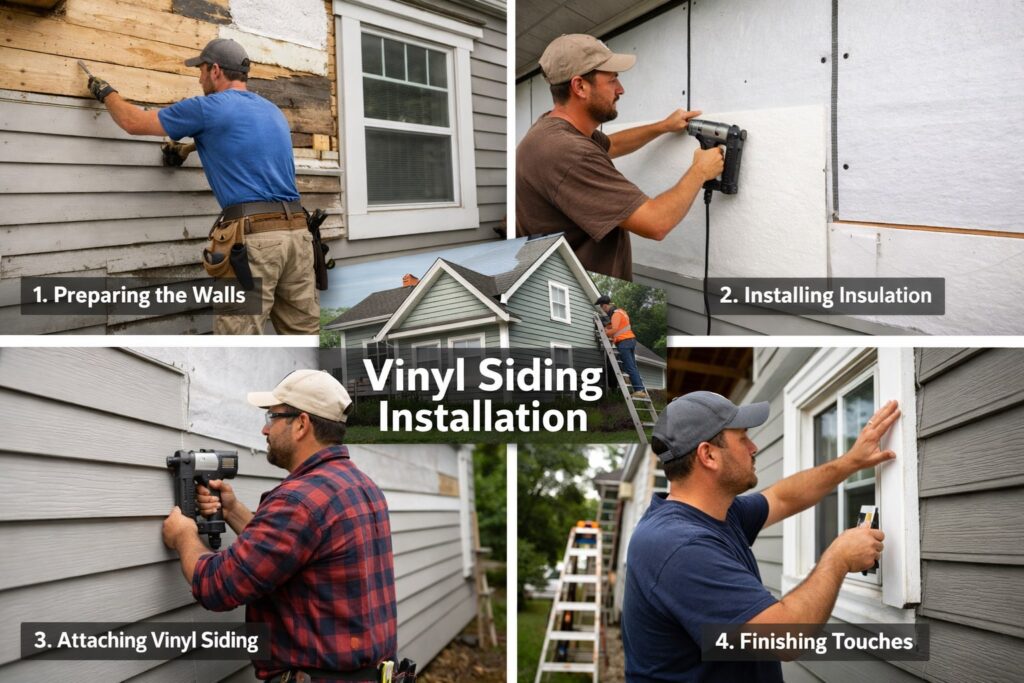
Installation starts with preparation: inspecting the exterior walls for damage or uneven surfaces, fixing any rot or loose material, and installing a weatherproof barrier before the first panel goes up.
Next comes the groundwork. A level starter strip at the bottom of the wall sets the tone for everything above it. Corner posts, J-channels, and trim go in before panels are hung, since these pieces let the siding expand and contract with temperature changes.
Panels are installed from the bottom up, locking into the row beneath them. Nails go in the center of each slot, left slightly loose so the panel can move with the weather. Panels get cut carefully around windows, doors, and corners to keep clean, professional lines.
The full process breaks down into five steps:
- Inspection and measurement. Contractors measure the exterior, assess existing siding, and check structural soundness.
- Surface preparation. Old siding comes off, walls get repaired, and moisture barriers go up.
- Starter strips and trim. Corner posts, window trim, and starter strips get installed for proper alignment.
- Panel installation. Panels go up from the bottom, left loose enough to expand and contract.
- Final inspection. Installers confirm every panel is sealed, secure, and properly aligned.
Can Vinyl Siding be Painted?
Yes, but it requires the right paint and realistic expectations. Vinyl expands and contracts with temperature more than wood does, so paint needs to flex with it or it will peel, crack, or warp under heat.
Painted vinyl siding also needs more maintenance than factory-colored siding, often requiring touch-ups or a repaint every 8 to 12 years. Painting can also void the manufacturer’s warranty, so check that before starting.
How Do You Cut Vinyl Siding?
The right tool depends on the cut you need:
- A circular saw with a fine-tooth blade, run backwards, works best for long, straight cuts. Support the panel fully and wear eye protection, since vinyl can shatter into sharp pieces.
- A utility knife works well for lengthwise cuts. Score the panel several times along a straightedge, then flex it back and forth until it snaps cleanly.
- Tin snips give the most control for notches, corners, and detail work around fixtures.
Cut vinyl in warm weather when possible. Cold vinyl is brittle and more likely to crack. Take precise measurements, test-fit before installing, and keep your blades sharp.
How Do You Clean Vinyl Siding?
Clean vinyl siding every 6 to 12 months in most conditions, or every 3 to 4 months in humid or heavily shaded areas where mold and algae build up faster. A simple wash with mild soap and water handles most routine buildup. Tougher stains need something more targeted: a vinegar solution works well on algae, a bleach-based cleaner on mold and mildew, and a rust-specific cleaner on rust stains.
For the full breakdown of cleaner types, application steps, and stain-by-stain tips, see our complete guide: Best Vinyl Siding Cleaner.
How Do You Remove Vinyl Siding?
If your project involves replacing old siding, it typically needs to come off first, a cost already factored into the $1,000 to $3,000 removal estimate above. Removal is straightforward with the right tool, a “zip tool” that unlocks each panel’s interlocking seam without cracking it. Rushing the job or using the wrong tool is what causes the panel damage homeowners are usually trying to avoid.
For the full step-by-step process, safety tips, and what to do with the old siding, see our complete guide: Vinyl Siding Removal Tool.
How Do You Choose the Right Vinyl Siding Contractor?
Not every contractor delivers the same quality, so a little research upfront pays off. Look for:
- Proper licensing and insurance, verified before you sign anything
- Real experience, with examples of past work you can review
- Genuine reviews, checked through Google, Yelp, or the Better Business Bureau
- Multiple quotes, at least three, so you can compare pricing and scope
- Solid warranties covering both labor and materials
- Local knowledge of Minnesota’s climate, codes, and material requirements
A contractor who checks all six of these boxes is far more likely to deliver clean, long-lasting work than one who wins the job on price alone.
What to Budget, and Your Next Step
Vinyl siding installation costs $4 to $12 per square foot in Minnesota, with most homes landing between $8,000 and $25,000 total. The exact number depends on your home’s size, the material grade you choose, and whether old siding needs to come off first.
Once it’s installed, vinyl siding needs very little from you: a cleaning twice a year, an annual inspection, and prompt attention to small repairs. Done right, it protects your home for 20 to 40 years and returns most of its cost when you sell.
If you’re ready to talk through options for your home, reach out for a free estimate. We’ll walk you through what makes sense for your budget, your home, and Minnesota’s weather.