
Minnesota homeowners know how unpredictable the weather can be. Severe weather can damage roofs, from hailstorms and heavy snowfall to strong winds and torrential rain. Your roof is your home’s first line of defense, so it’s also one of the most vulnerable parts of your property. That’s why homeowners across the state rely on storm damage repair services to protect their homes year-round.
This guide covers what you need to know about storm damage roof repair in Minnesota: how to spot damage, pick the right contractor, deal with insurance claims, and keep your roof protected for the long haul.
Why Storm Damage Is Common in Minnesota
Minnesota’s climate is rough and unpredictable. Roofs deal with hot summers, heavy winter snow, and frequent storms in spring and fall.
- Hailstorms strip protective granules, dent metal roofing, and crack shingles. Even small hail can cause hidden damage that shortens a roof’s life.
- High winds loosen flashing, tear off shingles, and expose the roof decking to moisture.
- Ice dams form when snow melts and refreezes at the roof edge, forcing water under shingles and causing leaks.
- Heavy rain creates new points where water can get in, saturates roofing materials, and strains gutters.
These are the reasons storm damage roof repair matters so much for Minnesota homes.
Read more: Choosing the Best Local Gutter Installers Minnesota for Your Home
What Storm Damage Roof Repair Typically Costs in Minnesota
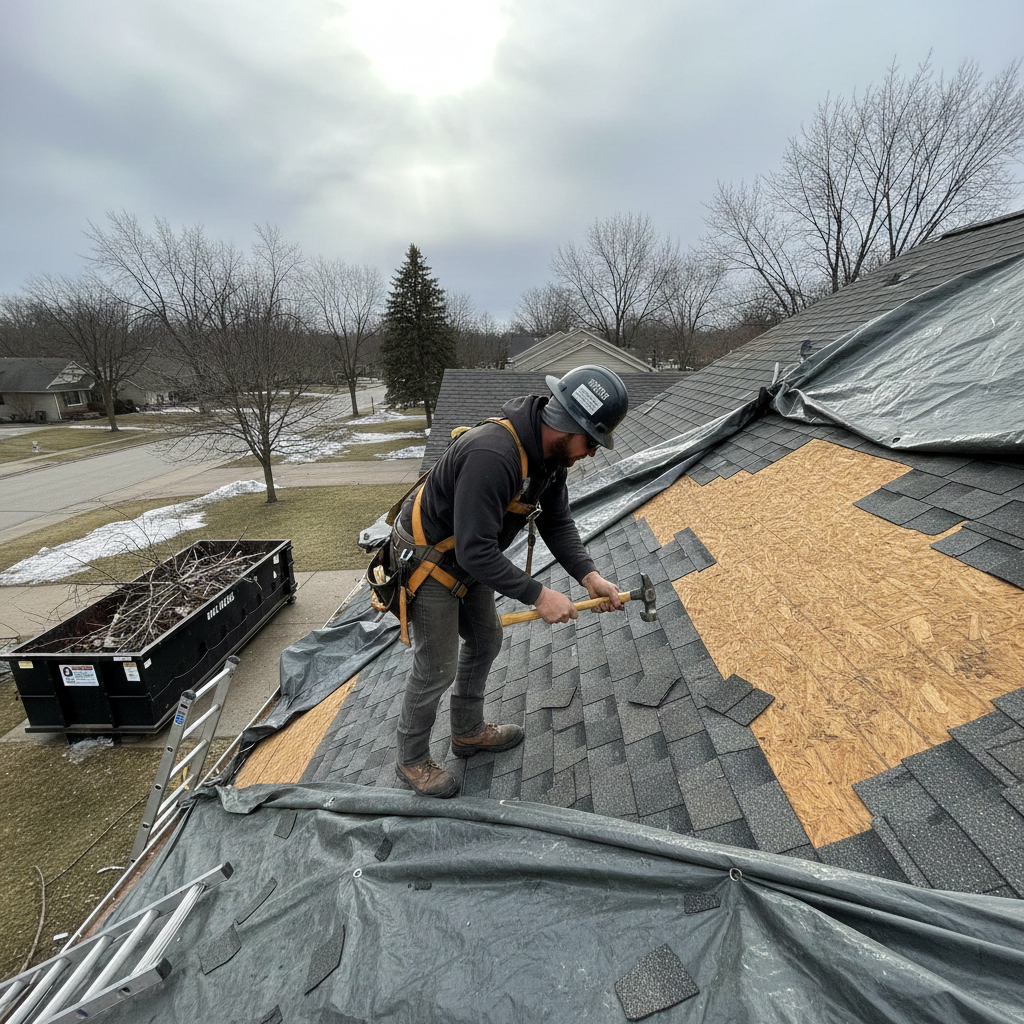
A few things affect the price:
- Extent of damage. Minor repairs might run a few hundred dollars. Full replacements can hit the thousands.
- Roof type. Tile, metal, and asphalt shingles all cost different amounts to repair.
- Labor and materials. Contractor rates and material grade both play into the total.
- Insurance coverage. Most storm-related repairs are covered in full or in part.
Most Minnesota homeowners can expect repair costs between $500 and $15,000 for partial fixes. A full roof replacement typically ranges from $9,000 to $30,000 depending on the home’s size and materials. Local labor premiums, steep roof pitches, and hidden structural damage to the roof decking under the shingles frequently drive these numbers higher depending on the damage. But, filing an insurance claim can cut your out-of-pocket costs significantly. More on that below.
Signs of Storm Damage: What to Look For and How to Check Safely
After a storm, you’re looking for two kinds of damage: the stuff you can see, and the stuff that only shows up once you know where to look. Check both. A roof can look fine from the driveway and still have real problems brewing underneath.
Visible Signs You Can Check From the Ground
Most homeowners don’t want to climb onto their roof, and for most of these signs, you don’t have to. Walk around the outside of your house, or take a look from a ladder:
- Missing or lifted shingles. Wind tears these loose often.
- Granule loss. Check your gutters and downspouts for granules after a hailstorm.
- Cracked or dented shingles. Small circular cracks or dents usually mean hail damage, and you can spot these without climbing up.
- Loose or damaged flashing. The metal around vents and chimneys can loosen or dent during storms.
- Sagging roof sections. Heavy snow can put enough stress on a roof to cause visible sagging.
Walk through the inside of your house too. Leaks or water stains on walls and ceilings usually mean a roof leak, even if nothing looks wrong outside. If you spot any of this, call a professional for a closer look. Don’t climb up and try to figure it out yourself.
Hidden Damage That’s Easy to Miss
Not all storm damage is obvious. The costliest problems often build up slowly, from issues nobody notices for months:
- Micro-cracks from hail. Tiny fractures can break a shingle’s watertight seal even when it looks fine.
- Compromised underlayment. Wind-driven rain often gets under shingles and weakens the underlayment long before you’d see a leak.
- Loose ridge caps. Strong wind loosens these, letting water seep in slowly over time.
- Small punctures from flying debris. Branches, twigs, and windblown debris leave small puncture points on the roof.
Even if the damage looks minor, get a roof assessment. Hidden damage is one of the biggest causes of delayed leaks and mold in Minnesota homes.
Attic Warning Signs
The attic gets overlooked, but it often shows trouble before the outside of your house does. Watch for:
- Wet insulation
- A musty or moldy smell
- Visible water streaks
- Rain marks on the rafters
- Light coming through the roof boards
Any storm damage assessment should include a look in the attic. A healthy attic prevents mold, protects the structure, and keeps your energy efficiency where it should be.
If you notice any of these signs (visible, hidden, or in the attic), call a storm damage roof repair professional before small problems become expensive ones.
Steps to Take Immediately After a Storm
Act fast. Quick action limits how much damage you end up with. Here’s what to do:
- Inspect your home safely. Look for obvious roof damage, debris, or missing shingles from the ground.
- Check for indoor leaks. Walk through your home and look for water spots or active leaks.
- Document everything. Take clear photos of any damage you find.
- Contact your insurance company. Report the storm and file a claim.
- Call a roofing professional. Pick a company with real experience in storm damage repair.
How Storm Damage Affects Home Energy Efficiency
Storm damage doesn’t just cause leaks. It messes with your home’s ability to hold a steady temperature. A damaged roof can lead to:
- Air escaping the house
- Your HVAC working overtime
- Higher monthly utility bills
- Weaker insulation performance
People tend to overlook this cost. Once you see the connection between storm damage and your energy bill, it’s a lot easier to see why fixing it fast matters.
What Kind of Roofing Holds Up Best in Minnesota Storms?
Some materials just handle Minnesota weather better than others.
- Impact-resistant asphalt shingles hold up better against hail without cracking or losing granules.
- Metal roofing resists wind uplift and hail denting, which makes it a solid choice for storm-prone areas.
- Architectural shingles are thicker and tougher than standard three-tab shingles, giving them an edge in high wind.
If you’re repairing or replacing your roof anyway, upgrading to a stronger material can meaningfully cut down on future storm damage.
How Winter Weather Compounds Existing Roof Damage
Damage that looks minor in the fall or summer can turn into a real problem once winter hits.
- Snow adds weight and moisture to spots that are already weakened.
- Ice dams form at the roof edge and push water under shingles that may already be loose from an earlier storm.
- Freeze-thaw cycles widen small cracks a little more every time the water inside them freezes.
Left alone, small storm damage can turn into a structural issue by spring. That’s part of why fixing it now matters, not just for the damage itself, but for what winter could do to it.
When Repair Isn’t Enough: Signs You Need a Full Replacement
Sometimes a patch job just isn’t enough. Full replacement usually makes more sense when:
- Shingle damage covers large sections of the roof
- More than one roof slope is affected
- Granule loss is widespread, not just in one spot
If you’re dealing with severe storm damage, a good roofer will help you figure out whether repair or full shingle replacement fits your situation and budget.
The Professional Storm Damage Roof Repair Process
Hiring a pro means the job gets done right. Here’s what the process looks like:
- Inspection. A roofing pro checks out the full extent of the damage. Here’s what to expect for roof inspection costs.
- Temporary protection. Tarping or sealing keeps leaks from getting worse while repairs get scheduled.
- Repair or replacement. Damaged decking, flashing, or shingles get fixed. Severe cases may call for a full replacement.
- Insurance coordination. Many contractors help with insurance paperwork.
- Final inspection. The finished work gets checked for durability and quality.
Insurance and Storm Damage Roof Repair
Filing an insurance claim isn’t always simple, but you’ll usually need to do it to cover storm damage costs. In Minnesota, here’s roughly how it works:
- File promptly. Insurance companies often work on tight deadlines.
- Get your documentation together. Photos, inspection reports, receipts, all of it.
- Work with a contractor. Many will meet the adjuster on-site and help you through the claims process.
- Know your coverage. Storm damage is usually covered, but check for exclusions in your policy.
A contractor who’s handled a lot of storm damage claims knows how to move this process along, which means less stress for you and a better shot at approval.
Read more: Exterior Siding Contractors: Everything You Need to Know Before Hiring
Benefits of Professional Storm Damage Roof Repair
Going with skilled roofers gets you:
- Safety. They’ve got the right tools and training.
- Quality materials. Contractors source durable materials that fit the job.
- Insurance know-how. Help through the claims process.
- Long-term protection. Repairs done to code, so you don’t run into the same issue again.
- Peace of mind. You know it’s actually fixed.
DIY vs. Professional Repairs
It’s tempting to save some money and handle repairs yourself, but this really isn’t the place to cut corners. Climbing onto a damaged roof without training or proper roof safety gear is genuinely risky, and a bad repair can void your warranty or make the damage worse. A professional gets it done safely and correctly, and protects your roof for the long run.
Preventing Future Storm Damage
You can’t stop storms, but you can cut down on the damage they cause:
- Regular roof inspections catch problems before a storm makes them worse.
- Gutter cleaning helps prevent ice dams and water backup.
- Trimming nearby trees cuts the risk of falling branches.
- Upgrading roofing materials with impact-resistant shingles and stronger flashing improves storm resistance.
- Insulation and ventilation help reduce ice dam formation in winter.
Why Local Expertise Matters in Storm Damage Roof Repair
Minnesota roofing is its own thing. Harsh winters, humid summers, and frequent storms mean it takes some specific know-how. Working with a local pro gets you:
- Familiarity with Minnesota building codes
- An understanding of the region’s weather patterns
- Access to materials suited for this climate
- Faster response after a storm
That local track record is worth prioritizing when you’re picking a storm damage roof repair company.
Choosing the Right Contractor for Storm Damage Roof Repair
When you’re picking a roofer, look for:
- Licensing and insurance. Always hire someone licensed and insured.
- Local reputation. Check reviews and references.
- Storm repair experience. This kind of work takes specific expertise.
- Warranty coverage. Look for a warranty on both labor and materials.
- Emergency service. Storm damage often needs a fast response.
Watch out for “storm chaser” contractors who show up after bad weather and disappear once the job’s done. Stick with a reputable local business instead.
Long-Term Value of Professional Repairs
Good storm repairs protect more than just your roof right now. They protect your home’s long-term value too. A properly repaired roof:
- Prevents leaks and structural damage
- Improves energy efficiency
- Boosts curb appeal
- Extends the life of your roofing system
- Increases your home’s resale value
The Role of Roof Ventilation in Storm Damage Prevention
Ventilation matters more than people think when it comes to storm resistance. Without it, moisture and heat get trapped, and that damages structural components over time. Poor ventilation can lead to:
- Faster shingle wear
- Ice dam formation
- Mold in the attic
- Rotted or warped decking
- Higher humidity inside the house
Upgrading your roof’s ventilation is a fairly simple fix that goes a long way toward protecting your home from future storm damage.
Restore Safety and Value After Storm Damage
Storms are going to happen in Minnesota. Being prepared is what makes the difference. Know how to spot damage, act fast, and pick the right people to work with, and your home stays safe. Professional storm damage roof repair gives your property real protection and peace of mind, no matter what caused the damage: hail, wind, or heavy snow.
When the next storm hits, don’t wait for shingles to fall off or leaks to get worse. Working with a solid local roofing pro protects your family, strengthens your roof, and keeps your home ready for whatever Minnesota throws at it next. Schedule a free storm damage inspection today.