
Siding is essential for both safety and curb appeal when renovating the outside of your house. Vinyl siding continues to be one of the most popular solutions for American homeowners. It is particularly appealing due to its low-maintenance vinyl siding cost to install, affordability, and durability. But most homeowners ask the same crucial question before committing to a project: how much does it cost to install vinyl siding?
Everything you need to know about the cost of installing vinyl siding is covered in this thorough guide, including labor costs, material prices, factors that affect overall costs, and what to anticipate from a professional vinyl siding installation. By the time it’s all over, you’ll know for sure if vinyl siding is the best choice for your house.
What Is Vinyl Siding?
Polyvinyl chloride (PVC) resin is the main component of vinyl siding, an external cladding material. It is made to look like wood siding while providing better protection against weather damage, dampness, and insects. Vinyl siding can match almost any architectural style because it comes in a huge range of colors, textures, and profiles.
Vinyl siding doesn’t need to be painted or stained as conventional wood siding does. Because of this, installing vinyl siding is a long-term, affordable option for homeowners looking for both durability and aesthetic appeal.
Read more: The Definitive Guide 2026: Roof With Hail Damage
Average Vinyl Siding Cost to Install
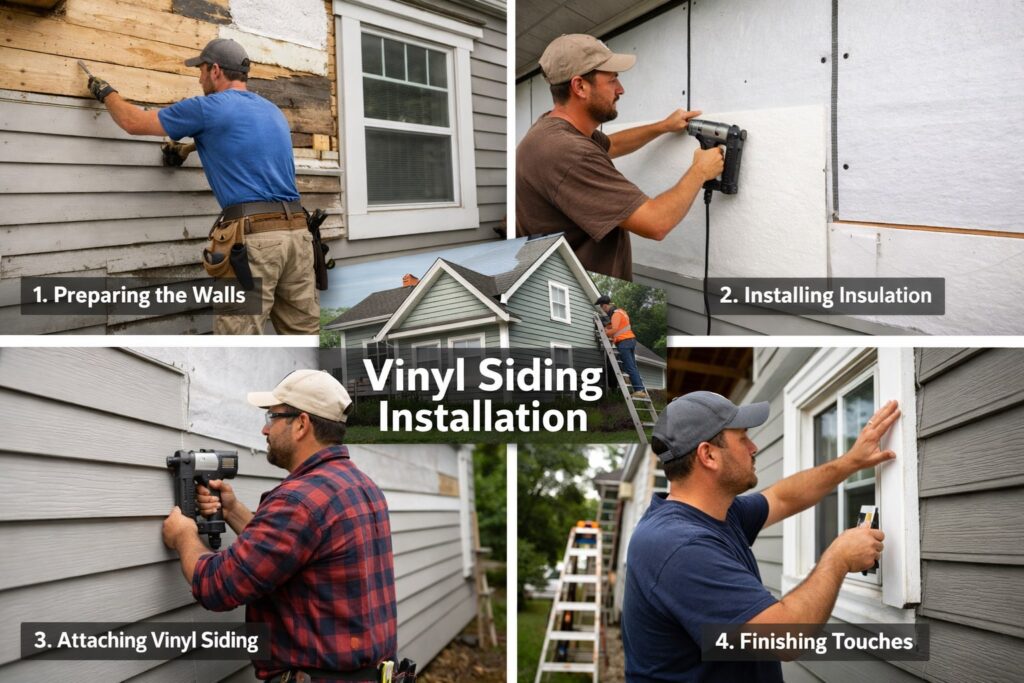
Installing vinyl siding usually costs between $6,000 and $18,000 for the typical single-family home. Depending on the materials, labor, and complexity of the project, homeowners should budget between $4 and $12 per square foot.
Typical Cost Distribution:
Low-end projects cost $4–$6 per square foot.
Mid-range projects cost between $6 and $9 per square foot.
Expensive projects $9–$12+ per square foot.
Materials, labor, trim, and basic installation are often included in these quotes. Repairs or other features could raise the total cost.
Vinyl Siding Installation Costs by Material Grade
Vinyl siding is not all made equal. The total cost of installing vinyl siding is heavily influenced by the material’s grade and thickness.
- Economy Vinyl Siding
Economy-grade vinyl siding is less durable but more reasonably priced since it is thinner and lighter.
- Cost of materials: $1 to $2 per square foot
- Ideal for: Low-cost developments or rental properties
- Standard Vinyl Siding
The most popular kind for installing vinyl siding in homes is this one.
Cost of materials: $2–$4 per square foot
Ideal for: Long-term domestic use that strikes a balance between cost and durability
- Premium Vinyl Siding
High-quality vinyl siding is frequently insulated, thicker, and more impact-resistant.
Cost of materials: $4–$7+ per square foot
Ideal for: Expensive residences and areas with harsh weather
Read more: The Definitive Guide: Best Onyx Black Shingles 2026
Labor Costs for Vinyl Siding Installation
A significant amount of the installation cost of vinyl siding is attributed to labor. Depending on their location and level of skill, professional installers usually charge between $2 and $5 per square foot.
What Is Included in Labor Costs
- Preparing the surface
- Old siding removal (if necessary)
- Putting up moisture barriers
- Accurate installation of vinyl siding
- Finishing and trimming tasks
In general, labor expenses will be higher for homes with several floors, intricate layouts, or architectural embellishments.
Are prices increasing due to labor/material costs?
Indeed, growing labor and material costs are driving up prices in the building and home renovation sectors. The cost of raw materials, including lumber, vinyl, insulation, roofing products, and fasteners, has steadily increased over the last few years, posing a challenge to contractors. Increased production and transportation costs have been caused by supply chain disruptions, fuel prices, and slowdowns in the global industry. The final cost that homeowners pay for projects finally reflects changes in the cost of production and shipping for manufacturers.
The cost of labor has also increased dramatically. The supply of experienced labor has not kept up with the high demand for skilled tradesmen, such as carpenters, roofers, and siding installers. As businesses fight to draw in and keep skilled workers, this labor shortage drives up pay. Additionally, contractors’ operational costs are increased by growing insurance premiums, licensing fees, and compliance requirements. Businesses must modify their prices in order to be profitable and uphold quality standards.
This means that homeowners may have to pay more for exterior remodeling and restoration initiatives than they did a few years ago. Delaying a job, however, can occasionally lead to even greater costs down the road if damage worsens or material prices keep rising. The secret is to prepare ahead, obtain several quotes, and collaborate with trustworthy experts who offer clear pricing. Investing in high-quality materials and expert installation still results in long-term value, durability, and increased property value, even while greater labor and material expenses do affect project pricing overall.
Factors That Affect Vinyl Siding Cost to Install
The total cost of installing vinyl siding depends on several factors. Homeowners can create more realistic budgets by being aware of these aspects.
- Home Size and Shape
Naturally, larger homes need more labor and supplies. Installation complexity is significantly increased in homes with steep walls, dormers, or unusual designs.
- Existing Siding Removal
Depending on the material and disposal costs, removing existing siding might increase the overall cost by $1,000 to $3,000.
- Insulated Vinyl Siding
Although insulated vinyl siding increases energy efficiency, the cost of materials goes up. Long-term, nevertheless, it might lower heating and cooling costs.
- Repairs and Prep Work
Before installing vinyl siding, any underlying structural damage, decay, or moisture problems must be fixed, which raises the overall cost.
- Regional Labor Rates
Because of regional variations in labor demand, climate, and local laws, the cost of installing vinyl siding varies.
How to Install Vinyl Siding
One of the best methods to update the outside of your house, increase curb appeal, and enhance energy efficiency is to install vinyl siding. Although accuracy is necessary for the procedure, careful planning is the key to avoiding costly errors and achieving a professional end.
Preparation is essential before beginning. Start by looking for damage, moisture problems, or uneven surfaces on the outside walls. Vinyl siding needs to be put on top of a stable, smooth base, so any rot or loose materials should be fixed. After that, if required, remove the old siding and install a weatherproof barrier to keep water and wind out of your house.
Establishing the groundwork for success is the next stage. How straight the rest of the siding looks depends on how level the starting strip is installed at the bottom of the wall. Before hanging the panels, the J-channels around windows and doors, corner posts, and trim pieces should be put in place. The durability of vinyl siding depends on these components’ capacity to expand and contract.
Always begin at the bottom and work your way up while positioning the panels. Without being too nailed, each panel should lock firmly into the one behind it. Nails should be centered in the slots and left slightly loose since vinyl siding needs to be able to move with temperature fluctuations. Panels should be carefully cut to fit around openings while keeping clean lines for a professional look.
A clean, appealing surface and long-lasting performance are ensured by knowing how to install vinyl siding correctly. Vinyl siding resists dampness, takes little upkeep after installation, and keeps its color for many years. Proper installation is essential to protecting your property and optimizing your investment, regardless of whether you choose to do it yourself or employ experts.
Can vinyl siding be painted?
Due to its low care requirements, durability, and affordability, vinyl siding is a popular exterior option for homeowners. However, fading, out-of-date hues, or surface deterioration over time may cause homeowners to question if vinyl siding can be painted. The quick answer is yes, but before beginning the project, there are a few crucial things to think about.
Vinyl siding can be painted, but it takes the correct planning, supplies, and mindset. Paint must be able to adapt to temperature fluctuations because vinyl, unlike wood, is designed to withstand moisture and color changes. Due to heat absorption, improperly applied paint can cause the siding to peel, split, or distort.
Maintenance is another factor to consider. Compared to factory-colored siding, painted vinyl siding will require greater maintenance. Vinyl is known for being low maintenance; depending on exposure and environment, painted surfaces may require touch-ups or repainting every 8 to 12 years. Examining warranties is particularly crucial because painting vinyl siding can nullify the original guarantee provided by the manufacturer.
In conclusion, for homeowners wishing to change the exterior of their home without having to replace it, painting vinyl siding might be a cost-effective option. When done right, it can improve curb appeal and prolong the siding’s visual life. This requires appropriate cleaning, the right paint, and reasonable expectations. A professional’s advice may help guarantee that the project is completed securely and successfully, particularly if your siding is older or exhibits damage.
Vinyl Siding Installation Process Explained
Homeowners can better enjoy the benefits of professional vinyl siding installation by being aware of the installation procedure.
Step 1: Inspection and Measurement
Contractors measure the outside, check the siding that is already there, and evaluate the structural soundness.
Step 2: Surface Preparation
During this phase, old siding is removed, walls are repaired, and moisture barriers are installed.
Step 3: Starter Strips and Trim
To guarantee correct alignment, installers install window trim, corner posts, and starting strips.
Step 4: Vinyl Panel Installation
Because vinyl panels are put from the bottom up, they can expand and shrink.
Step 5: Final Inspection
Installers make sure the panels are properly sealed, secure, and aligned.
Read more: Expert Roof Drip Edge Flashing Solutions – Get a Free Estimate Today
How Long Does Vinyl Siding Last?
How long does vinyl siding last? is one of the most crucial questions you’ll ask if you’re contemplating an outside makeover. Your long-term curb appeal, maintenance expenses, and return on investment are all directly impacted by durability. The good news is that vinyl siding is one of the most widely used siding materials in the US due to its remarkable durability and minimal maintenance needs.
Average Lifespan of Vinyl Siding
Climate, material thickness, installation quality, and continuous maintenance are some of the variables that affect the longevity.
Its durability is greatly increased by its resistance to decay, insect damage, and moisture problems.
Best Vinyl Siding Cleaner: The Definitive Guide
Maintaining curb appeal and prolonging the life of your siding depends on keeping the outside of your house clean. Selecting the best vinyl siding cleaner helps get rid of environmental buildup, filth, mildew, and algae without causing surface damage. Vinyl siding may become dull or discolored over time due to the accumulation of dirt from rain, pollen, pollutants, and areas with persistent wetness. A high-quality cleaner is made to gently remove these impurities without affecting the siding’s color or gloss. Using the proper cleaning guarantees that your house will always appear clean, bright, and well-maintained, regardless of whether you want an eco-friendly solution or a commercial-grade composition.
A good vinyl siding cleaner should be safe for the siding and the surrounding landscaping, easy to use, and effective. Many homeowners search for solutions that can be used with a garden hose or pressure washer on low and require little washing. The best cleaners remove mold and mildew stains without using harsh chemicals that could eventually erode the siding. Additionally, some alternatives offer UV protection, which lessens fading caused by exposure to the sun. The age of your siding, the intensity of the stains, and whether you prefer a ready-to-use solution or a concentrate that you can dilute are all key factors to consider when choosing a cleaner.
Maintaining vinyl siding’s durability and aesthetic appeal requires routine maintenance. Cleaning once or twice a year helps avoid accumulation that may cause long-term surface deterioration or discoloration. To avoid streaking, cleaning should be done in warm conditions, away from intense heat and direct sunlight. The cleaner may be used efficiently without causing any scratches to the siding by using a soft brush or cloth and applying light pressure. In addition to protecting their investment, homeowners may improve curb appeal and keep their vinyl siding looking almost new for many years by following a regular cleaning schedule and using the right materials.
What Affects How Long Vinyl Siding Lasts?
Several important factors influence longevity:
- Quality of Materials
Vinyl siding comes in several varieties. Premium-grade, thicker vinyl panels typically survive longer than less expensive, thinner ones. Additionally, insulated vinyl siding strengthens the structure and reduces warping.
- Professional Installation
One of the main causes of early siding failure is improper installation. When the temperature changes, vinyl requires space to expand and compress. Over time, it may buckle or crack if it is fastened too tightly or fitted improperly.
- Climate and Weather Exposure
Homes may deteriorate more quickly in regions with intense heat, freezing weather, frequent storms, or significant UV exposure. But contemporary vinyl siding is designed to withstand severe weather conditions better than ever.
- Maintenance Habits
Although vinyl siding doesn’t require much upkeep, it can last longer with the occasional cleaning. Dirt, mold, and mildew that could lead to discoloration or degradation are eliminated by washing it once or twice a year.
Signs It May Be Time to Replace Vinyl Siding
- Warping, holes, or cracks
- Chalky or faded appearance
- Panels that are loose or absent
- Higher energy costs as a result of insulation problems
- Damage from moisture under panels
How to Make Vinyl Siding Last Longer
Take into account these suggestions if you wish to increase durability:
Select high-quality, UV-resistant vinyl goods.
Employ knowledgeable siding experts.
Examine your siding once a year.
Use water and mild soap to clean.
Take care of little repairs right away to prevent them from spreading.
Your siding can easily reach the higher limit of its anticipated lifespan with proper maintenance.
Is Vinyl Siding Worth the Investment?
The answer is “yes” for a lot of homeowners. Vinyl siding provides a great mix of low maintenance, longevity, and cost. Unlike wood, it doesn’t need to be painted, sealed, or repaired frequently. It is a wise long-term investment because it is also resistant to moisture damage and pests.
Furthermore, contemporary vinyl siding is available in a vast array of hues and textures, including designs that resemble the grain of real wood. Homeowners may increase curb appeal without compromising durability thanks to this.
What is the lifespan of vinyl siding, then? Generally speaking, you can count on 20 to 40 years of dependable operation; with the right setup and maintenance, that number could go even higher. Vinyl siding offers decades of protection, energy efficiency, and aesthetic appeal when properly installed and maintained.
Investing in premium materials and expert installation, if you’re thinking about upgrading your siding, will guarantee that your home’s exterior will last as long as possible and provide the most value.
Benefits of Vinyl Siding Installation
The long-term advantages should be taken into account, even though homeowners frequently concentrate on the installation costs of vinyl siding.
Low Maintenance
Vinyl siding resists insects, peeling, and cracking, and never needs to be painted.
Weather Resistance
Made to be resistant to UV rays, wind, rain, and hail.
Energy Efficiency
Lower electricity costs and better home insulation are two benefits of insulated vinyl siding.
Cost-Effective Longevity
With little maintenance, vinyl siding can last 30 to 40 years.
How Long Does Vinyl Siding Last
The average lifespan of vinyl siding is 20 to 40 years, and with the right maintenance, it may often last even longer. When professionally installed and maintained, high-quality vinyl siding can last for at least 50 years and still look great.
As we have talked about, how long will vinyl siding last? Its longevity is influenced by several things. Climate has a significant impact; over time, performance may be impacted by intense heat, freezing temperatures, and powerful winds. Just as crucial is the quality of the installation; properly constructed siding permits expansion and contraction, avoiding warping or breaking. Its lifespan can also be increased with routine care, such as mild cleaning and quick repairs following storms.
Modern vinyl siding has an edge over many conventional materials because it is made to withstand decay, dampness, and insects. It often maintains its structural integrity over decades, though sun exposure may cause it to fade slightly. It is possible to replace broken panels without having to redo the complete exterior.
All things considered, vinyl siding is an affordable and long-lasting choice for homeowners seeking longevity with little maintenance.
Best Vinyl Siding Installation Cost 2026
When compared to fiber cement or wood siding, vinyl siding is one of the more economical options, with professional installation prices in the US averaging between $4 and $12 per square foot in 2026. Choose mid-grade conventional lap or Dutch lap types, which mix durability and beauty without premium pricing, for the best value at $4–$7 per square foot. Expect totals of $8,000 to $25,000 for a 2,000–2,500 square foot home, with labor (50% of costs) maintained low by selecting skilled local builders.
Cost by Siding Style
| Style | Cost per Sq Ft Installed | Total for 2,500 Sq Ft Home |
| Traditional Lap | $4–$7 | $10,000–$17,500 |
| Insulated Vinyl | $6–$12 | $15,000–$30,000 |
| Board-and-Batten | $5–$9 | $12,500–$22,500 |
| Vertical Vinyl | $4–$9 | $10,000–$22,500 |
Ways to Minimize Costs
For basic protection, choose economy or standard vinyl instead of insulated, saving 20–30% on materials. Get multiple bids to negotiate labor rates around $54–$60/hour, and hire professionals during off-peak seasons for reductions of up to 10–15%. If importing US vinyl is not necessary, PVC substitutes in Ludhiana provide cheaper local prices of ₹150–₹500/sq ft (~$1.80–$6).
Vinyl Siding vs Other Siding Options
Vinyl vs Fiber Cement
Installing vinyl siding is quicker and less expensive than installing fiber cement, which also requires repainting.
Vinyl vs Wood
Although wood siding is more aesthetically pleasing, it requires more upkeep and is more expensive over time.
Vinyl vs Aluminum
Vinyl is more resilient to corrosion and dents than aluminum.
How to Reduce Vinyl Siding
Homeowners can take strategic steps to reduce installation expenses:
- Choose standard-grade materials
- Schedule installation during off-season months
- Limit custom trim and accessories
- Address repairs early
- Get multiple professional quotes
How to Cut Vinyl Siding 2026
Proper vinyl siding cutting guarantees smoother installation, professional-looking results, and neat edges. The kind of cut and the instruments you have on hand will determine the technique you choose.
The greatest tool for straight cuts is a circular saw. To keep it from chipping, install a fine-tooth plywood blade and run it backwards. To prevent cracking, always take two measurements, precisely indicate your cut line, and fully support the panel. Because vinyl can break into sharp pieces when cut, wear safety eyewear.
A utility knife is a straightforward and efficient choice for lengthwise cuts or tiny trims. After making many secure scores along a straightedge, flex the siding panel back and forth until it snaps neatly. This technique is quiet, accurate, and perfect for cutting around doors or windows.
Tin snips are helpful for detailed work, notches, and shortcuts. When moulding siding to fit around corners or around fixtures, they provide you with more control. To prevent jagged edges, apply pressure steadily and smoothly.
If at all feasible, cut vinyl siding in warm weather. Cold siding is more brittle and prone to breaking. Before installation, test-fit each component, take your time taking measurements, and keep your blades sharp. Vinyl siding may expand organically, lock correctly, and retain a polished, long-lasting appearance with precise, clean cuts.
Is Vinyl Siding Installation Worth the Investment?
Installing vinyl siding is always one of the best exterior modifications in terms of return on investment. It lowers maintenance expenses, raises resale value, and improves curb appeal.
Vinyl siding is a cost-effective upgrade because most homeowners recover 70% to 80% of the installation costs when they sell their property.
Read more: What Is TPO Roofing? A Complete Guide for Property Owners 2026
Choosing the Right Vinyl Siding Contractor
Just as crucial as selecting the appropriate material is selecting a skilled contractor.
What to Search for
- Installers with insurance and a license
- Clear pricing
- Robust guarantees
- Experience in the area
- Customer reviews that have been verified
A trustworthy contractor guarantees accurate vinyl siding installation, safeguarding your investment for years to come.
How to Remove Vinyl Siding
When done correctly, removing vinyl siding is a simple procedure that is frequently required for exterior restorations, repairs, or replacements. Preventing damage is essential to allowing panels to be reused when necessary.
Get the appropriate tools first. A zip tool, often known as a siding removal tool, is necessary. Panels can be unlocked using it without damaging the locking edges. Vinyl siding is put on from the bottom up, so start at the top of the area you wish to remove.
To remove the locking lip, slide the zip tool beneath the upper panel’s bottom edge and pull downward. After the panel has been unlocked, carefully raise it to reveal the nails underneath. Be cautious not to distort the siding when removing the nails using a pry bar or hammer claw. Work gradually along the panel’s length until it is totally free.
Continue descending after removing the first panel, following the same procedures for every row. Depending on how much siding you’re removing, you might need to loosen or remove corner posts, J-channels, and trim pieces individually.
If you intend to reuse panels, label them and stack them flat, avoiding direct sunlight to avoid warping. Reinstallation or repairs are made much simpler by taking your time and employing the right approach, which also helps to ensure a clean removal and protects the underlying wall.
Final Thoughts on Vinyl Siding Cost to Install
Vinyl siding cost to install can vary depending on several factors such as labor, materials, home size, and local conditions. Despite these price variations, vinyl siding remains one of the most affordable exterior improvements available today. Thanks to its affordability, durability, and low maintenance needs, the cost of installing vinyl siding makes it a wise choice for homeowners seeking long-term value.
Knowing these expenses can help you make well-informed selections if you’re considering an outside remodel and guarantee that your house will look fantastic and be safe for many years to come.