
Homeowners in Minnesota are well aware of how erratic the weather can be. Severe weather can damage roofs, from hailstorms and heavy snowfall to strong winds and torrential rain. Your roof serves as the first line of defense during storms, safeguarding your family, possessions, and house structure. Regretfully, this also makes it one of your property’s most vulnerable areas. For this reason, people around the state depend on storm damage roof repair MN services.
Everything you need to know about storm damage roof repair in Minnesota will be covered in this guide, including how to identify damage, choose the best contractor, deal with insurance claims, and guarantee long-term roof protection.
Although the majority of Minnesotans are aware of how storms affect their roofs in the short term, there are a number of neglected aspects of storm damage, long-term prevention, and home protection that merit more consideration. These fresh subjects will make your blog stand out and provide visitors with a more comprehensive understanding of how to keep your home storm-resistant.
Why Storm Damage Is Common in Minnesota
The climate of Minnesota is harsh and diverse. Residential roofs face several weather-related difficulties, including hot summers, heavy winter snowfall, and frequent severe storms in the spring and fall.
- Hailstorms – Hail can erode protecting granules, dent metal roofing, and fracture shingles. A roof’s lifespan is shortened by hidden damage from even tiny hailstones.
- High Winds – Winds cause flashing to loosen, shingles to fall off, and roof decking to become wet.
- Ice Dams – Water is forced beneath shingles and causes leaks when heavy snow melts and refreezes around roof edges.
- Heavy Rain – Torrential downpours cause water penetration sites, saturate roofs, and strain gutters.
Storm damage roof repair in MN services are essential for safeguarding Minnesota homes throughout the year due to these hazards.
Read more: Choosing the Best Local Gutter Installers Minnesota for Your Home
Hidden Storm Damage: What Homeowners Rarely Notice
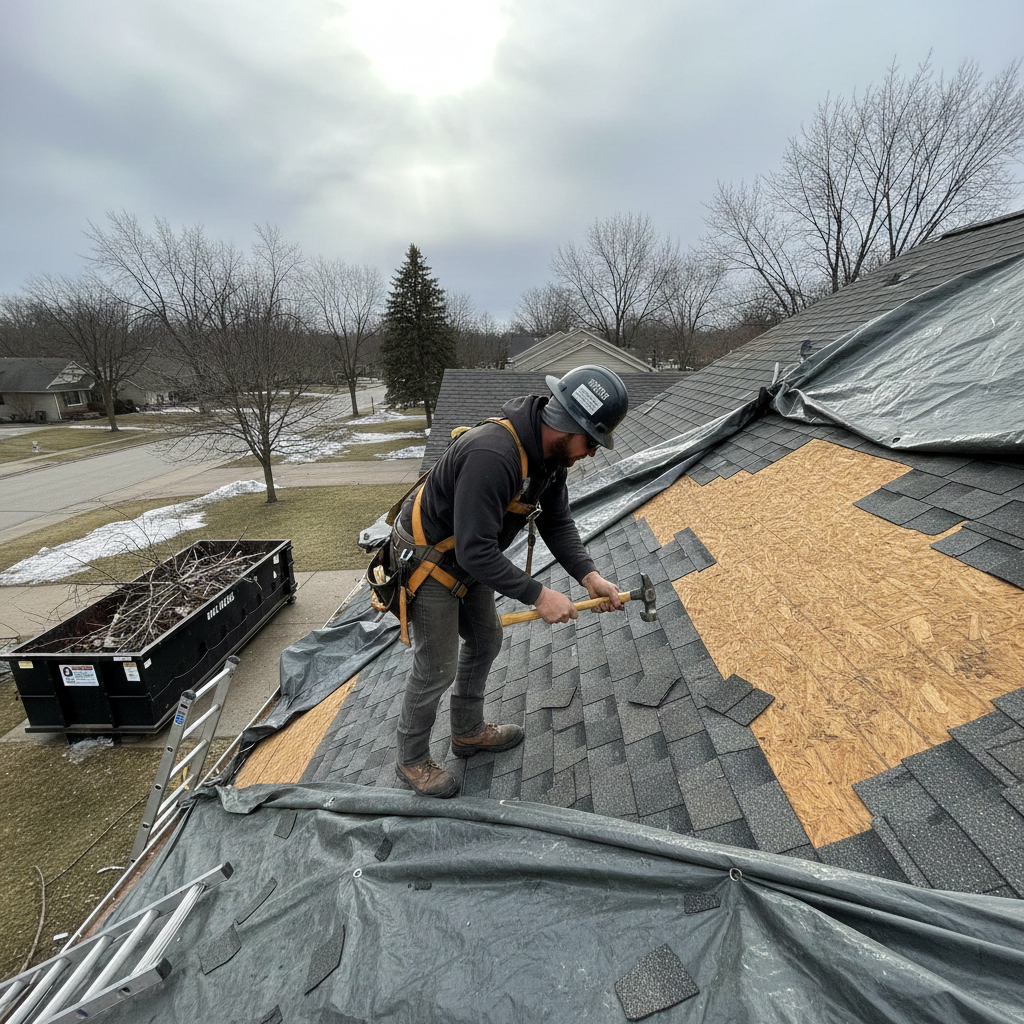
Not all hurricane damage is noticeable or dramatic. The most costly problems frequently arise gradually as a result of covert concerns that remain undiscovered for months. Among them are:
- Micro-cracks from hail: Tiny fractures can impair the watertight seal even when the shingles seem intact.
- Compromised underlayment: Rain from the wind frequently seeps beneath shingles, weakening the underlayment long before leaks show up.
- Loose ridge caps: Ridge tops are loosened by strong winds, allowing precipitation to gradually seep in.
- Small punctures from flying debris: Tiny puncture points on roofs are frequently caused by tree branches, twigs, or flying debris.
Even if the damage appears to be minor, homeowners should arrange for a roof assessment. One of the main reasons Minnesota houses experience delayed leaks and mold growth is hidden damage.
The Importance of Attic Health After Storms
The attic is one space that is frequently disregarded. The attic shows problems much before the outside does after a storm.
Important Attic Signs of Roof Damage
- Wet insulation
- Moldy smell
- Visible water streaks
- Rainfall on the rafters
- Penetration of light through the roof boards
Storm assessments should include attic checks as a required component. In addition to preventing mold, a healthy attic improves energy efficiency and safeguards structural elements.
Signs You Need Storm Damage Roof Repair in MN
Many homeowners are unsure of what to check for after a hurricane. While some harm is evident, some problems are more subtle and, if neglected, get worse over time. The following indicators point to the necessity for roof repair:
- Missing or lifted shingles – Shingles are frequently removed by windstorms.
- Granule loss – After hail, look for extra shingle grains in the gutters.
- Leaks or water stains inside – Roof leaks are frequently indicated by yellow stains on walls and ceilings.
- Cracked or dented shingles – Small, circular cracks or markings are frequently the result of hail damage.
- Loose flashing – It is possible for metal strips surrounding vents and chimneys to break away.
- Sagging roof sections – Structural stress may result from heavy snowfall.
Before minor concerns turn into high costs, it is imperative that you get in touch with a professional for storm damage roof repair if you observe any of these difficulties.
Steps to Take Immediately After a Storm
Taking swift action after a storm minimizes additional harm. Minnesota homeowners should take the following actions:
- Inspect your home safely – Examine your property for obvious roof damage, debris, or missing shingles.
- Check for indoor leaks – Check inside for leaks or water spots.
- Document everything – Capture crisp images of any damage.
- Contact your insurance company – Submit a claim and report the storm incident.
- Call a roofing professional – Select a reputable company that specializes in storm damage roof repair in Minnesota.
How Storm Damage Affects Home Energy Efficiency
Leaks are not the only result of storm damage. It affects a home’s ability to control its temperature as well.
A damaged roof may result in:
- Air fleeing the house, either hot or cold
- Increased use of HVAC
- Increased monthly utility costs
- Diminished performance of the insulating
Homeowners frequently fail to consider this cost impact. They are better able to comprehend the importance of prompt repairs when the relationship between storm damage and energy loss is explained.
Ideas to prevention of storm damage roof repair:
Why Minnesota Homes Are More Vulnerable to Storm Roof Damage
Describe how Minnesota’s climate poses special threats to roofs due to hailstorms, strong winds, heavy rain, and frigid winters. Roofs are susceptible to leaks because hail can loosen shingle granules, and wind can raise shingles and reveal the underlayment.
The Cost of Ignoring Minor Storm Damage
Talk about the consequences of homeowners delaying repairs:
- Roof leaks caused by tiny fissures
- Mold or damage to the structure
- Increased energy costs as a result of insulation problems
If storm damage is not repaired, it can quickly get worse.
Emergency Roof Protection After a Storm
Describe the actions that householders should take right away:
- Use a tarp to cover any exposed parts.
- Remove any debris from gutters.
- Check for leaks in the attic.
- Make an appointment for a qualified roof inspection.
After a storm, this section assists users looking for quick fixes.
Roof Materials That Perform Best in Minnesota Storms
Talk about storm-resistant materials like:
- Asphalt shingles that are resistant to impact
- Roofing made of metal
- Shingles in architecture
Describe how stronger roofing systems lessen damage during heavy winds or hailstorms.
Signs of Storm Damage You Can See From the Ground
A lot of homeowners are reluctant to scale their roof. Advice on safe inspection, such as:
- Looking for any missing shingles
- Searching gutters for granules
- Examining vents and flashing
Shingles and metal surfaces frequently sustain dents or bruises from hail hits.
How Seasonal Weather Worsens Existing Roof Damage
Describe how:
- Accumulation of snow
- Ice dams
- Cycles of freezing and thawing
Can cause significant structural issues from little storm damage.
When Roof Repair Isn’t Enough: Signs You Need Replacement
Describe circumstances in which mending isn’t the best course of action:
- Extensive shingle damage
- Several roof slopes are impacted
- Protective granule loss
Instead of patch repairs, complete replacement may be necessary in cases of severe storm damage.
Preventative Maintenance to Protect Your Roof Before the Next Storm
Add advice like this:
- Frequent inspections of roofs
- Gutter cleaning
- Cutting down trees nearby
- Bolstering roof edges and flashing
Storm-related roofing problems are greatly decreased by preventive treatment.
The Role of Professional Roof Inspections After Severe Weather
Describe the significance of expert inspections:
- Find concealed damage
- Issues with documentation for insurance claims
- Stop leaks and expensive repairs in the future.
Choosing a Reliable Local Roofing Contractor in Minnesota
Advise on:
- Verifying insurance and licenses
- Examining local reviews
- Steer clear of “storm chaser” contractors
- Selecting reputable local roofing firms
This area increases conversions and fosters trust.
Professional Storm Damage Roof Repair in MN Process
Correct repair work is ensured when a professional roofer is hired. Typically, the procedure consists of:
- Inspection – Roofing professionals evaluate the damage.
- Temporary protection – Leaks can be avoided by sealing or tarping.
- Repair or replacement – Damaged decking, flashing, or shingles are fixed. Complete roof replacement is advised in extreme circumstances.
- Insurance coordination – Many contractors help with insurance documentation.
- Final inspection – The finished product is examined for durability and quality.
Insurance and Storm Damage Roof Repair
Although it can be difficult, filing an insurance claim is frequently required to pay for storm damage. In Minnesota, it operates as follows:
- File promptly – Deadlines for insurance businesses are frequently very tight.
- Provide documentation – Send in receipts, inspection reports, and pictures.
- Work with a contractor – Numerous roofing contractors meet adjusters on-site and assist with claims.
- Understand coverage – Roof damage from storms is usually covered by insurance, although there may be exclusions.
Expert contractors with storm damage roof repair expertise know how to expedite this procedure, reducing homeowners’ anxiety and increasing the number of claims that are approved.
Read more: Exterior Siding Contractors: Everything You Need to Know Before Hiring
Benefits of Professional Storm Damage Roof Repair
Selecting skilled roofers to fix storm damage guarantees:
- Safety – Experts employ the appropriate instruments and methods.
- Quality materials – Durable shingles and parts are sourced by contractors.
- Insurance expertise – Support for submitting a claim.
- Long-term protection – Repairs are completed in accordance with industry standards, avoiding recurring problems.
- Peace of mind – Being certain that your roof has been properly restored.
DIY vs. Professional Repairs
Despite the temptation to minimize costs by doing repairs yourself, storm damage is not the time to do so. It’s risky to climb onto your roof untrained, and poor repairs can cancel warranties or exacerbate damage. Safety, compliance, and long-lasting protection are ensured when you choose a professional for storm damage roof repair.
Preventing Future Storm Damage
Although storms cannot be prevented, householders can lower their risks by doing the following:
- Regular roof inspections – Address problems before storms make things worse.
- Gutter cleaning – Keeps ice dams and water backups at bay.
- Trimming nearby trees – Lowers the possibility of branches falling on roofs.
- Upgrading roofing materials – Better storm resistance is achieved with stronger flashing and impact-resistant shingles.
- Insulation and ventilation – Lessens the wintertime building of ice dams.
Why Local Expertise Matters in Storm Damage Roof Repair MN
The roofing conditions in Minnesota are distinct. Specialized understanding is needed because of the harsh winters, muggy summers, and frequent storms. Employing local professionals guarantees:
- Knowledge of Minnesota building codes
- Familiarity with regional weather patterns
- Availability of materials suitable for the location
- Fast reaction times following storms
For this reason, it’s crucial to pick a storm damage roof repair business with a track record of success in the area.
Emergency Roof Preparedness Checklist for Minnesota Homes
Many homeowners in Minnesota put off taking action until after the storm. Damage can be greatly decreased by using a proactive emergency checklist:
Before a Storm
- Keep loose outside objects secure.
- Examine downspouts and gutters.
- Cut off branches that droop over
- Verify that the attic ventilation is operational.
- Examine the coverage of your house insurance.
In the midst of a storm
- Don’t go outside.
- Keep an eye out for discolouration or dripping on ceilings.
- Prepare buckets and towels in case of an emergency leak.
Following a Storm
- Make a walk-around outside
- Look for moisture in the attic.
- Record everything.
- Make an urgent call to a roofing expert
Giving people access to this checklist makes your blog more useful.
Cost of Storm Damage Roof Repair MN in the USA
Some things determine the cost:
- Extent of damage – While complete replacements can cost thousands of dollars, minor repairs might only cost a few hundred.
- Roof type – The cost of tile, metal, and asphalt shingles varies.
- Labor and materials – Contractor and material grade have an impact on costs.
- Insurance coverage – The majority of storm repairs are covered in full or in part.
Depending on the extent of the damage, homeowners in Minnesota can anticipate repair expenses ranging from $500 to $15,000. Out-of-pocket costs can be considerably decreased by filing insurance claims.
Read more: Why Energy Efficient Windows MN Are the Best Investment for Your Home
Choosing the Right Contractor for Storm Damage Roof Repair
When choosing a roofer, take into account:
- Licensing and insurance – Hire licensed contractors at all times.
- Local reputation – Examine references and reviews.
- Experience with storm repairs – Expertise is essential.
- Warranty offerings – It should cover both labor and materials.
- Emergency services – Storm damage frequently necessitates prompt action.
Steer clear of storm-chasing contractors that show up during weather events and then vanish. For dependable storm damage roof repair in the USA, instead, depend on reputable local businesses.
Long-Term Value of Professional Repairs
Investing in high-quality storm repairs helps preserve the long-term worth of your house in addition to solving any immediate issues. A roof that has been correctly repaired:
- Avoids leaks and damage to the structure
- Increases the efficiency of energy
- Boosts curb appeal
- Increases the roofing system’s longevity
- Increases the value of real estate
The Role of Roof Ventilation in Storm Damage Prevention
A roof’s ability to endure storms depends on its ventilation. Without it, moisture and heat are trapped, damaging structural elements.
Insufficient Ventilation Causes:
- Quicker degeneration of shingles
- Creation of ice dams
- Attic mold growth
- Decking that is rotten or warped
- Higher humidity levels within
Upgrading roof ventilation is an easy yet effective way to protect Minnesota from future storm damage.
Conclusion – Restore Safety and Value
Storms are inevitable in Minnesota, but being ready makes all the difference. Your home will remain safe if you know how to identify damage, take prompt action, and select the correct experts. Professional storm damage roof repair MN services offer your property long-lasting protection and peace of mind, regardless of the cause—heat, wind, or heavy snow.
When the next storm hits, act now rather than waiting for shingles to fall off or leaks to get worse. You can protect your family, strengthen your roof, and keep your house resilient to Minnesota’s harshest weather by working with reputable local professionals.